6 Alternatives to Turning Off External Sharing in SharePoint
I first wrote an article about this back in 2018. To my surprise, 8 years later, this is still a pretty hot topic and is often discussed on online forums. I am talking about external sharing. Or rather, its disablement. It bothers me quite a bit, especially when I see my clients engage in this practice.
In a nutshell, I still see many organizations completely turning off external sharing in their tenant. The primary reason stated is always security and accidental oversharing. Those are valid reasons; however, turning off external sharing doesn’t resolve the issues.
I have seen anecdotal reports of employees simply emailing documents as attachments to bypass SharePoint’s external sharing restrictions. Or worse, copying documents to their personal OneDrive, Google Drive, or Dropbox accounts and sharing them freely externally as if there is no tomorrow.
My philosophy is (and always was) that external sharing must be allowed. However, IT can limit exposure and oversharing by implementing a variety of techniques, which I would like to list below.
Option 1: Enable external sharing on a site-by-site basis
While you can enable external sharing globally, you can always manage it at the site level. If you have a site that should not be shared externally, you can disable it there.
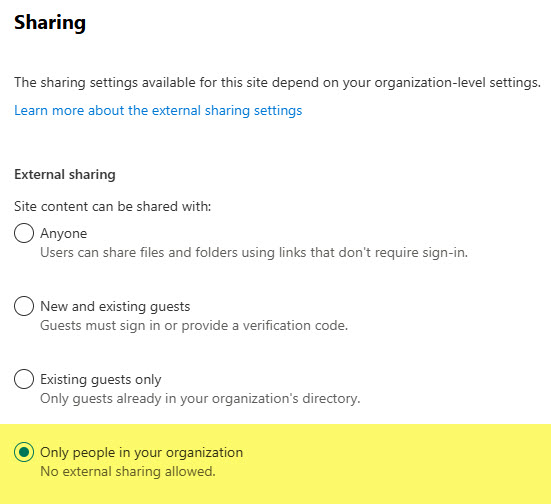
Ability to enable or disable external sharing at the site level
Option 2: Restrict by domain
You can also restrict external sharing by domain. You can either block certain email domains (i.e., yahoo.com or gmail.com) or allow trusted ones. I explained how to achieve it here.
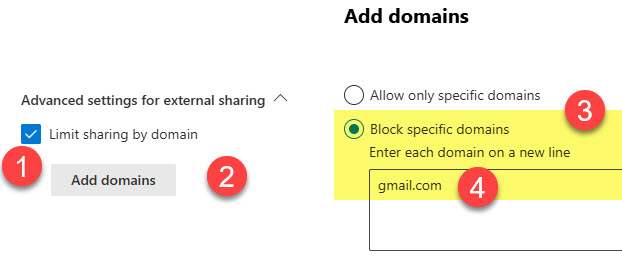
Ability to limit external sharing by domain at the site level
By the way, you can also configure domain settings at both the global and site levels too!
Option 3: Create a Security Group for users to share externally
Another way to reduce oversharing is to designate a security group of users allowed to share externally. You do this in the Admin Center.
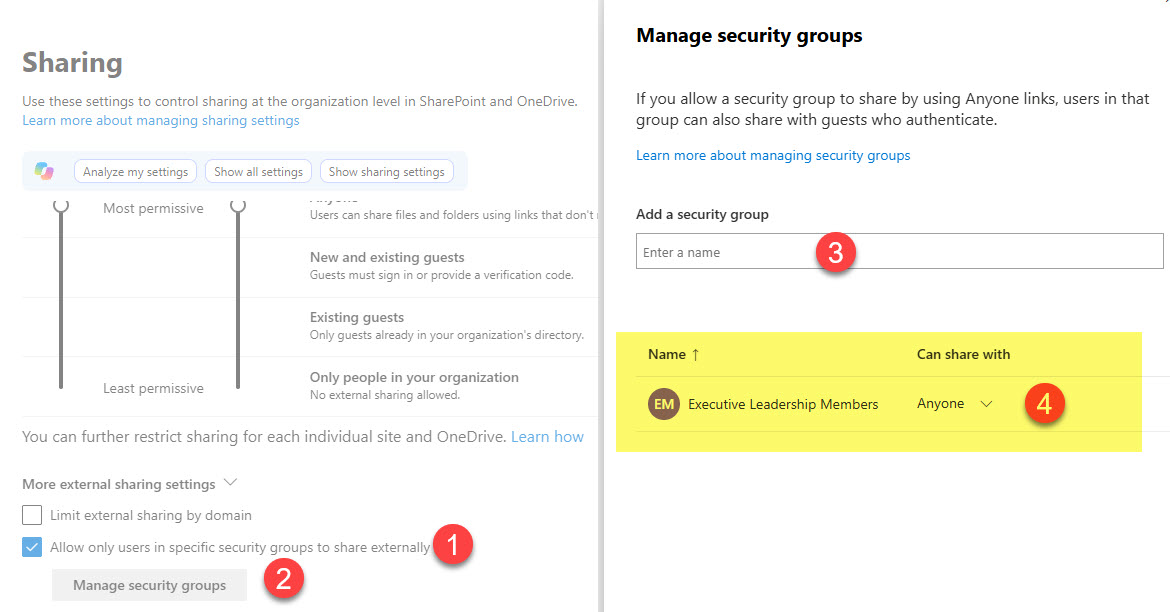
Ability to allow external sharing for select users by designating a security group
Option 4: Configure default sharing links
Another trick to minimize the impact of oversharing is to configure default sharing links. You can alter the type of links and permissions (View or Edit).
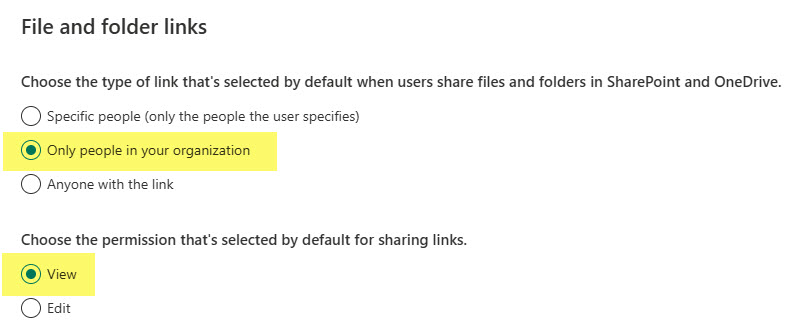
Configure default sharing links
Option 5: Configure expiration for links
You can also set an expiration duration so external links don’t remain active forever.

Ability to expire external sharing links
Option 6: User Training
The best way to prevent oversharing would be to conduct user training. Most sharing issues happen when users don’t understand how to share properly and end up sharing the entire site when they only want to share a file or folder. So basic user training would go a long way.

Share Article